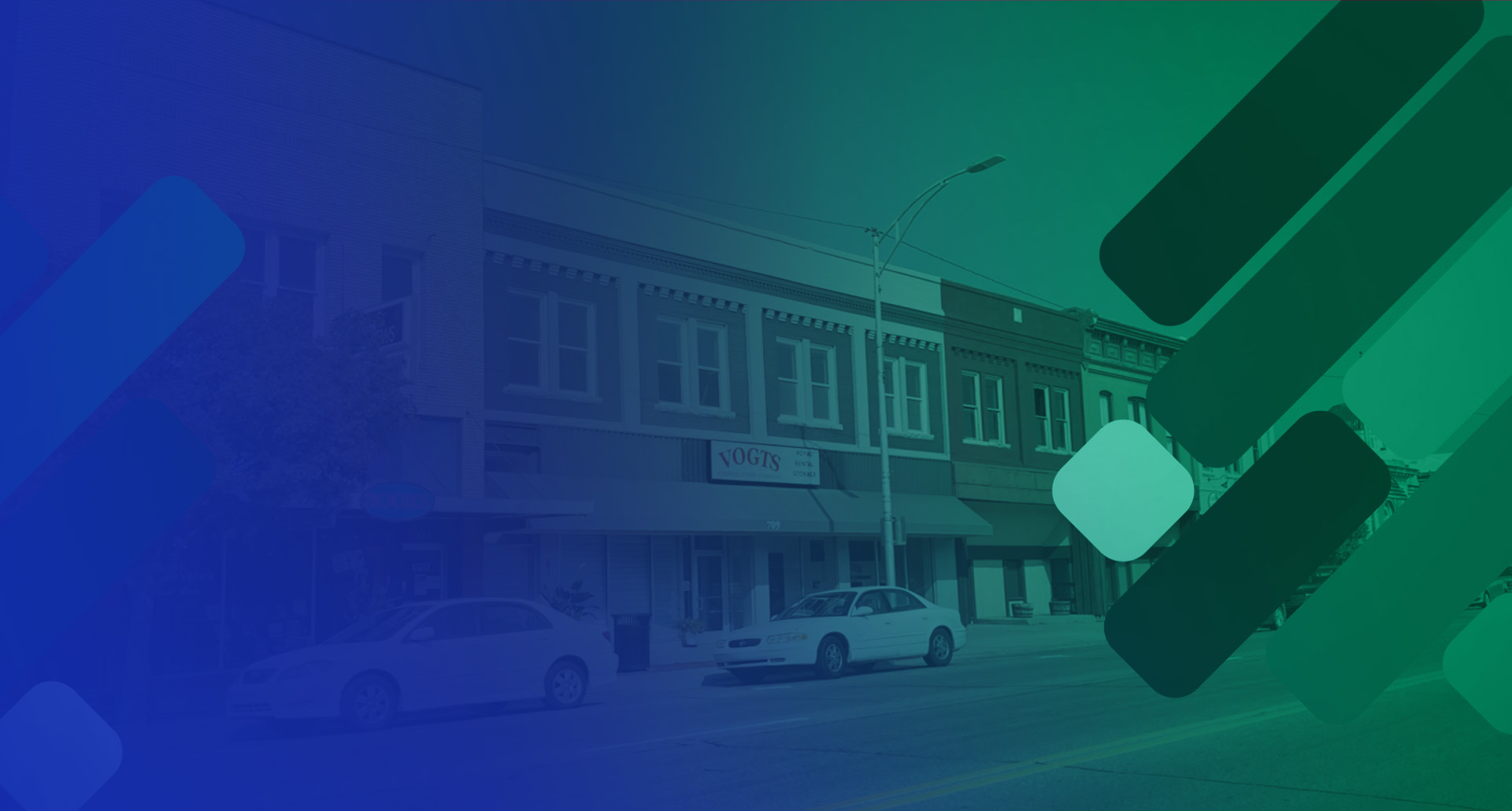

REHABILITACIÓN COMERCIAL
Este programa financia proyectos que ayudan a los propietarios privados a rehabilitar estructuras para evitar la propagación de condiciones de deterioro.
MAX AWARD
$300,000
MATCH
25%
of the CDBG grant request
Calificar
COMPRUEBE SI SU COMUNIDAD CUMPLE LOS REQUISITOS
Check qualifications, programs, and more
2026 Pre-Application Now Open!
A pre-application must be submitted and approved by CDBG before an application can be submitted. The pre-application is used to determine project eligibility and readiness before proceeding to the full application stage. Commerce will review submissions within ten days and provide further instructions. Please discuss your project with CDBG staff before submitting a pre-application. You can contact a project manager at any time or email [email protected].
Pre-Application Form
Propósito
En Commercial Rehabilitation Grant Program is intended to help cities improve the quality of their downtown commercial districts by assisting private property owners in the rehabilitation of blighted structures, and return them to productive businesses. It is hoped that a strategic investment of grant funds in a key building would prevent the spread of blighted conditions to other nearby structures and be a catalyst for change in the commercial district.
CDBG National Objective
All CDBG projects must meet a national objective and involve an eligible activity under the Housing and Community Development Act of 1974. National objectives are 1) benefiting Low- and Moderate-Income persons (LMI), 2) aid in the prevention or elimination of blight, and 3) meet a need having a particular urgency (urgent need).
En Commercial Rehabilitation Grant Program will utilize one of two national objectives: benefiting Low- and Moderate-Income persons (job creation/retention) or prevention/elimination of blight (spot basis). Eligible activities depend on the national objective met, and all scopes of work must be approved by CDBG. A wider variety of activities may qualify under the job creation/retention objective. When meeting this objective Public Benefit standards must also be met.
Eligible Activities
LMI Job Creation/Retention Objective:Criterios de selección
Las solicitudes de subvención se evalúan para su financiación en función de la necesidad, la preparación, el impacto y la sostenibilidad del proyecto, así como de la fuente y la disponibilidad de fondos de contrapartida. Revised 2026 guidelines will be available in January.
Las consideraciones clave incluyen:
Fondos de contrapartida
Local funding is required for all CDBG projects, and no project can be funded entirely by grants. Matching funds can originate from private or public sources, but the application must document that these funds are firmly committed (e.g., a letter of commitment from a bank or other funding source). Examples of matching funds include bank loans, industrial revenue bonds, owners’ equity, contributions from local governments, or grants and loans from economic development entities.
Applicants are allowed to match CDBG funds with other grant funds if that funding is secured in a city/county account by the time the contract is signed. At least 10% of the matching funds must be cash from a local source (i.e., owner funds, city/county cash). Any expenses incurred prior to the grant award are ineligible for reimbursement with CDBG funds. This includes grant writing, engineering, and architecture.
Pre-Application
Applicants must submit a pre-application to confirm eligibility before applying for CDBG funding. This process allows us to provide early feedback and address any eligibility concerns before applicants complete the full application, and ensures projects align with program goals and are prepared for funding. The form requires a brief project description, estimated budget, eligibility status, and readiness to proceed. Commerce will review submissions within ten days and provide further instructions. Only those with an approved pre-application may submit a full application, but pre-approval does not ensure grant funding.
Communities may apply for multiple CDBG categories, but only one application may be submitted from a major category. Major categories include: Large and Small Community Facilities, Blueprint to Build, Regional Water Implementation, and Water and Sewer Infrastructure. For example, a city cannot apply for both a Large and Small Community Facilities project. However, a city can submit applications for both a Housing Rehabilitation and a Community Facilities: Large Grants project.
The local government must hold two public hearings to demonstrate that reasonable efforts have been undertaken to ensure involvement of citizens or citizen organizations throughout all stages of the program. A notice about the hearing must be published in a local newspaper with the widest circulation, and it must appear at least 5 full days before the hearing—not counting the day it’s published or the day of the hearing itself. These hearings must be held at a time and location convenient to potential or actual beneficiaries, with accommodations for non-English speaking residents and persons with disabilities. A sample public hearing notice is included in program guidelines.
First Public Hearing: Must be held at least 15 days before the CDBG application is submitted, and no earlier than 120 days. The purpose of the hearing is to inform citizens about the proposed project, including its location, total cost, activities, and beneficiaries. Community members must be given a chance to suggest other project ideas and share their input, and the local governing body should carefully consider this feedback before submitting the application. The total project funding and CDBG amount requested must match what appears in the public hearing notice.
Second Public Hearing: Must be held at the conclusion of the project, prior to close out to inform citizens of the project’s successful or unsuccessful completion, and to obtain input on the grantee’s performance.
Yes, all CDBG-funded projects are federally required to have an environmental review. The Environmental Determination of Level of Review form must be submitted with the application. This will inform Commerce as to what level of environmental review you will undertake for your project if awarded.
Post-award, the city or county must conduct a full environmental review of the project, even for small projects that don’t require construction. This responsibility cannot be delegated and the cost to conduct the review must be paid with local funds. Project activities may not begin until after Commerce issues the environmental release of project funds.
Las ciudades y condados pueden calificar utilizando la hoja de cálculo de datos del Censo 2015 del HUD para determinar su porcentaje actual de LMI que el HUD está reportando como calificador. Si la comunidad no cumple con nuestro requisito de 51 por ciento de LMI basado en los datos de ese documento, pueden optar por hacer una encuesta basada en los ingresos de la ciudad o condado que se beneficia del proyecto. En ocasiones, los proyectos no benefician a toda la ciudad o condado, lo que da lugar a un beneficio para la zona objetivo. Para cumplir el requisito del 51% de LMI para este tipo de proyecto, se requiere una encuesta basada en los ingresos de los beneficiarios sólo en esa zona. Se puede solicitar al equipo de CDBG información adicional sobre cómo realizar una encuesta basada en los ingresos.
Mapa del escaparate comunitario
Vea otras comunidades que han recibido financiación en años anteriores
Calificar
LMI ayuda El programa Community Development Block Grant (CDBG) exige que cada actividad financiada por el CDBG beneficie principalmente a personas con ingresos bajos o moderados (LMI), contribuya a la prevención o eliminación de barrios marginales o deteriorados, o satisfaga una necesidad de desarrollo comunitario que revista especial urgencia.
| Personas en Familia |
Límite de ingresos familiares LMI*. |
|---|---|
| 1 | |
| 2 | |
| 3 | |
| 4 | |
| 5 | |
| 6 | |
| 7 | |
| 8 |
LMI calculations are from the 2020 Census and LMI by household are from 2026 HUD Section 8. Final LMI will be confirmed upon application review.
Buscar asistencia
La asistencia de un profesional con experiencia en subvenciones CDBG puede ayudarle a agilizar y reforzar su solicitud. Una parte o la totalidad de los costes de contratación de la ayuda pueden correr a cargo de su indemnización.
Encuentre profesionales en su zonaAplicación
2025 CDBG Commercial Rehab Guidelines (.pdf) ver todos los recursos AplicaciónOctober 16, 2026
Reciba notificaciones para este año y el próximo






 Español
  English
  日本語
日本語