| Email: | [email protected] |
|---|---|
| Website: | flinthillsfiddler.wordpress.com |
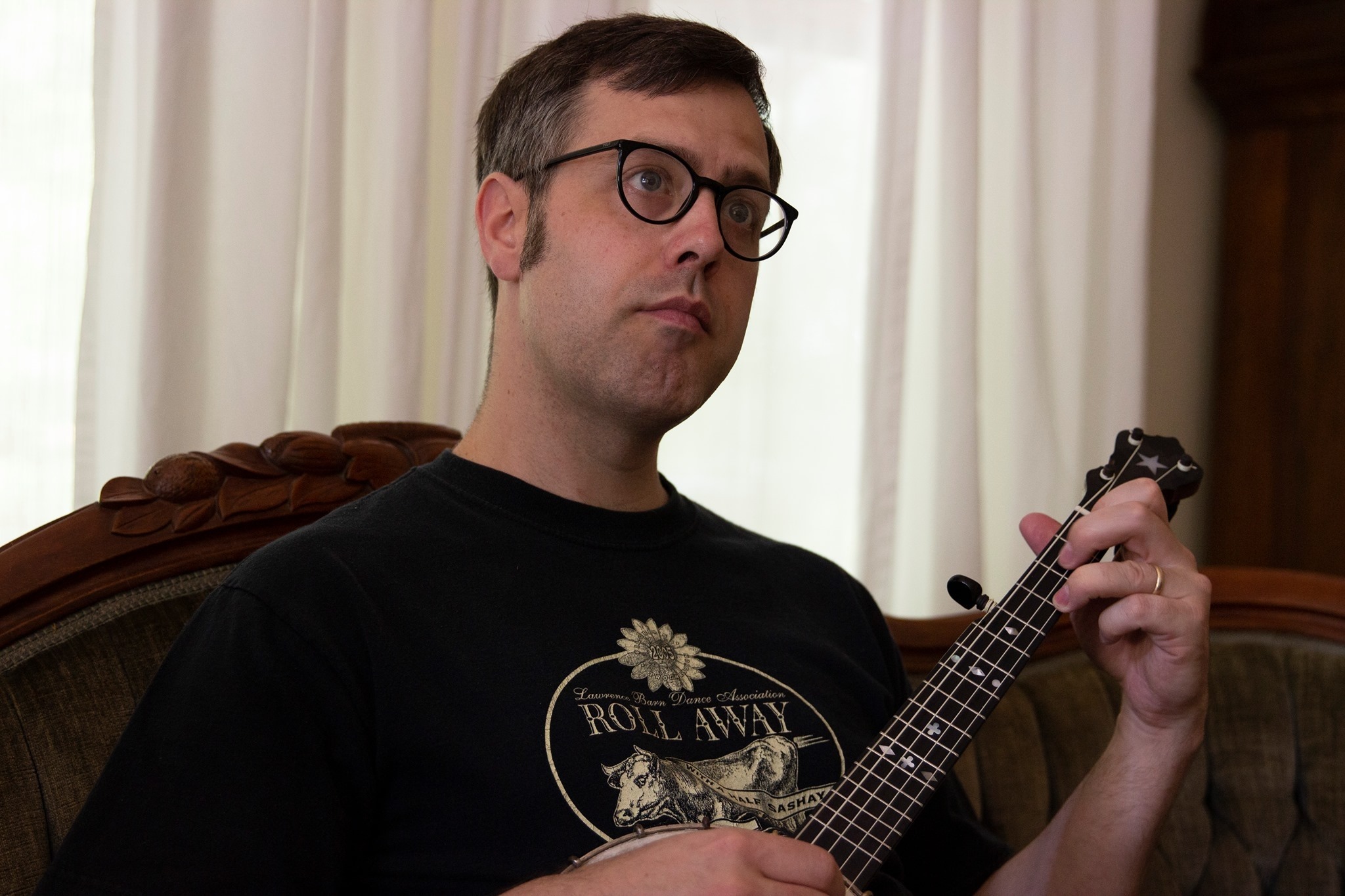
A native Kansan, Derrick Doty has been playing traditional fiddle and banjo for over 25 years and teaching music for over 20 years. Hearing stories of his great-grandfather playing the fiddle for dances in the barn on the family farm inspired him to pick up the instrument. Over the years, Doty has played fiddle for barn and contra dances at Wichita, Newton, Salina, Lawrence, the KC area, and many small towns throughout eastern Kansas, and even New York state.
Doty is a member of the Tallgrass Express String Band, a folk group in the Flint Hills of Kansas that has provided entertainment for over 20 years. The group features songs about the culture, nature, and history of the Flint Hills written by Flint Hills Balladeer Annie Wilson. He also plays in Bodarc, an old-timey string band featuring a unique repertoire of traditional American fiddle tunes and songs. And also plays in Grandpa Snazzy, a mandolin club ensemble that plays popular music of the early 20th century. He continues to teach music privately as well as at the Flint Hills Academy of Music.
Doty also teaches workshops and visits public elementary school orchestras, music classes, and colleges to talk about the history of music in Kansas and play traditional music. Since 2023, Derrick has been a speaker on the Humanities Kansas Speakers Bureau and shares his program on Kansas’ music history throughout the state.
Doty’s Kansas Music History explores early Kansas music and musicians, both formal and informal. Through storytelling, music, song, and PowerPoint, Doty shares an often-overlooked aspect of our history and culture, revealing the musical traditions — both formal and informal — of Kansas and its musicians from the Territorial era through the age of recording and radio.
Kansas’ Music History explores everyday Kansans and their role in our state’s traditions, such as early fiddlers and banjo players who came to settle the territory, the music they played, and how they impacted their communities. You’ll also learn about Kansans who made it big and became nationally known entertainers, like Carson Robison, Byron Harlan, Wendell Hall, and George Walker, to name a few. Using a variety of instruments to help tell this story, we’ll learn about the history and evolution of the instruments and the music as well.
Kansas’ Music History fee is $400 for up to 200 miles of travel, $600 for 201-350 miles, and $750 over 300 miles.
Band concert and entertainment fees vary widely depending on which band, travel time, number of musicians performing, length of performance, and whether or not sound will be provided.
Please contact Derrick for a quote for your event.
Besides a performance or workshop, a meet and greet or Q/A time can be provided. This often gives the audience and community a chance to ask questions and learn more about the instruments, traditions, and stories they may not otherwise get to hear. It’s also a great way for the community to be able to share their own family stories of musicians and dances, which Doty is always documenting for posterity.
A fiddle workshop provides students with the tools they need to learn a tune without the aid of written music, in an impromptu setting. Teaching them to listen for short, repetitive, or familiar phrases that recur throughout the piece helps make it easier to learn by ear and memorize a tune. A basic understanding of theory, chord progression, etc., makes it easier to improvise when you don’t know the melody. Students will learn how to second, and explore variations, which is a great way to demonstrate the folkloric process of tunes changing over time. Additionally, I almost always intersperse music instruction with history, either about the music, the instrument, or the area where the tune comes from.







 English
  Español
  日本語
日本語